

Every day, our feet support our body weight, absorb the impact of thousands of steps, and enable our active daily lives. Despite their essential role, foot wellness is frequently overlooked until discomfort, heel pain, or skin damage interferes with mobility. Understanding proper daily foot care and selecting appropriate protective solutions is vital for maintaining long-term health, preventing chronic issues, and enhancing daily comfort through effective podiatric care.
In this guide, based on practical experience and clinical podiatric insights, we cover the fundamentals of foot health, primary care categories, product selection criteria, and effective daily maintenance routines.
1. Fundamentals of Foot Health and Common Issues
Understanding Foot Anatomy and Mechanics
Foot health serves as the foundation for full-body alignment and systemic mobility. The human foot is a complex structure consisting of 26 bones, 33 joints, and over 100 muscles, tendons, and ligaments. When any part of this intricate system is strained, it causes a domino effect, frequently leading to knee, hip, or lower back discomfort. Maintaining healthy feet ensures proper posture, balance, and energy-efficient movement throughout life.
Common Daily Foot Conditions
Everyday activities, improper footwear, and environmental stress can contribute to several common concerns:
· Dryness and Cracked Heels: Prolonged standing or dry environments cause the heel skin to harden and crack, leading to discomfort and potential infection risks.
· Pressure Sores and Calluses: Repeated friction from ill-fitting shoes creates thickened areas of skin or painful pressure points.
· Muscle Strain and Plantar Fasciitis: Extended periods of walking, running, or standing place excessive stress on the plantar fascia, leading to severe arch fatigue, heel pain, and joint instability.
The True Goal of Preventative Care
The primary goal of foot care is twofold: preventative protection and targeted relief. By using specialized solutions designed to hydrate skin, distribute mechanical stress, and support structural recovery, individuals can maintain peak mobility and prevent minor discomfort from escalating into chronic conditions.
2. Primary Foot Care Product Categories and Benefits
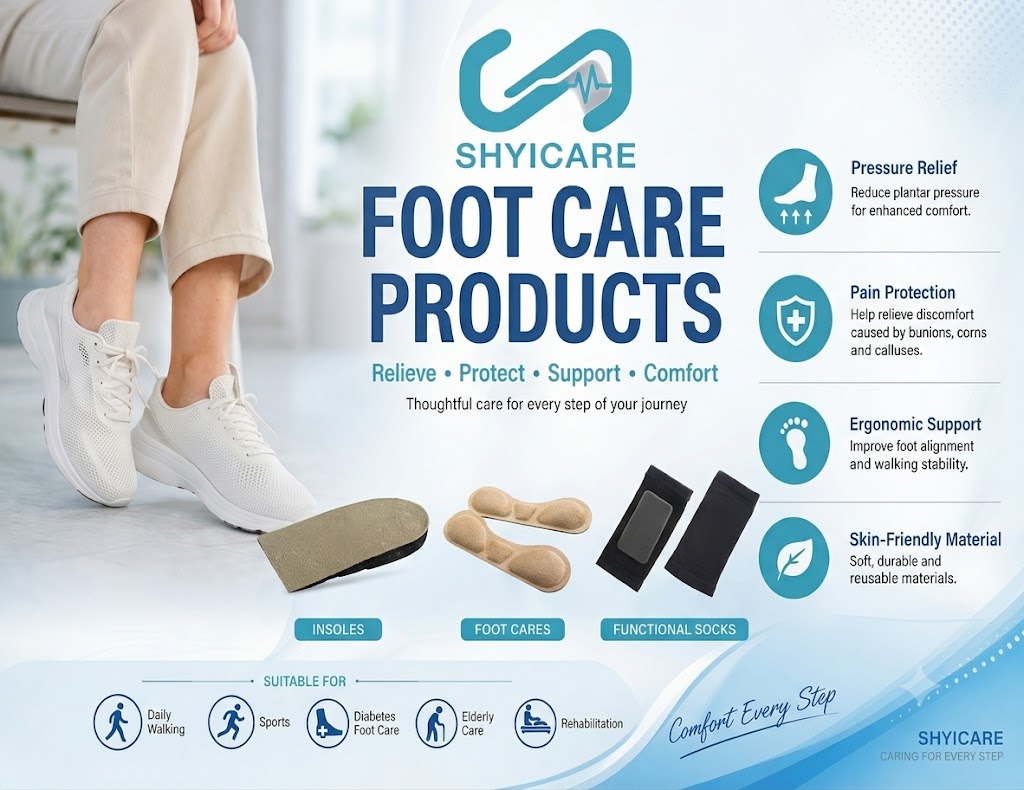
To address diverse needs, foot care solutions are categorized into three specialized functional areas:
|
Product Category |
Primary Benefits |
Key SHYICARE Solutions |
|
Moisturizing & Dermatological Care |
Deep hydration, softens calluses, restores skin elasticity |
Reusable gel-lined socks and heel sleeves |
|
Therapeutic & Compression Support |
Joint stabilization, improves circulation, reduces fatigue |
Breathable arch wraps and ankle compression sleeves |
|
Post-Op & Rehabilitation Care |
Shock absorption, swelling reduction, tissue protection |
Medical-grade gel padding and orthotic supports |
Deep Hydration Care
Dry, cracked skin requires sustained hydration that standard lotion cannot maintain. Specialized gel socks incorporate interior gel layers that lock in moisture. As the material absorbs natural body heat, it continuously delivers deep hydration to calloused tissue.
Therapeutic Compression Support
For those experiencing joint fatigue or plantar fasciitis, therapeutic compression wraps provide uniform pressure around key arches. This helps stabilize weak joints, promote microcirculation, and alleviate strain during prolonged standing.
Post-Operative Protection
Following foot surgery or acute strain, sensitive tissues require medical-grade protection. Padded gel supports shield vulnerable areas against unwanted friction while providing an optimal recovery environment.
3. How to Select the Right Foot Care Solution
Choosing the right foot care product depends on evaluating three core criteria:
1. Identify Your Primary Need:
o For Dry/Cracked Heels: Select reusable moisturizing gel socks for dermatological hydration.
o For Arch Pain or Fatigue: Choose a dynamic compression sleeve to support joints during movement.
o For Severe Heel Pressure/Plantar Fasciitis: Opt for targeted gel padding and orthotic arch supports.
2. Material and Safety Standards: Look for medical-grade, hypoallergenic gels paired with breathable fabrics to ensure long-term wearability without skin irritation.
3. Ergonomic Fit and Pressure Distribution: Ensure anatomical precision so that pressure is evenly distributed across the arch or heel without restricting blood circulation.
4. Daily Foot Care Routine and Best Practices
· Establish a Daily Routine: Thoroughly wash and dry your feet before applying moisturizing gel socks or compression gear to ensure optimal contact and hygiene.
· Care Instructions: Hand-wash gel products in warm water with mild soap. Air dry in a shaded, ventilated area away from direct heat to preserve gel elasticity.
· Real-World Experience Tip: Many users standing 8+ hours daily report noticeable fatigue reduction when pairing daytime compression sleeves with evening gel hydration sessions.
· When to Consult a Professional: While non-prescription podiatric care products provide significant daily relief, severe swelling, unhealing wounds, or persistent severe pain should always be evaluated by a certified podiatrist.
How do I choose the best foot care product for my condition?
Identify your primary symptom first. For dry or cracked heels, select gel-lined moisturizing socks. For fatigue, arch pain, or plantar fasciitis, choose a supportive compression sleeve. For post-surgery recovery, use medical-grade gel padding designed for shock absorption.
Are SHYICARE foot care product reusable, and how should I clean them?
Yes, all SHYICARE foot care product are designed for repeated use. Gently hand-wash them with lukewarm water and mild soap, then allow them to air dry naturally in a shaded spot away from direct sunlight.
Can I wear foot compression sleeves overnight?
Compression sleeves are engineered primarily for active daytime wear and structured recovery. Unless specifically advised by a healthcare professional, avoid wearing tight compression gear continuously while sleeping.